Why Are Placemats Important for Dining Tables? A Complete Guide
Placemats protect a dining table from scratches, moisture rings, food spills and everyday friction, and they give each diner a defined space. The best material depends on how you use your table: silicone and polyester for busy family meals, cotton for casual everyday use, bamboo for a natural look, and full-grain leather for a refined, long-lasting finish.
A dining table is one of the most used surfaces in a home. Breakfasts, family dinners and special gatherings all happen on it, and regular use can leave scratches, water rings, food stains and heat marks. This is where a placemat becomes useful.
A placemat creates a protective layer between the table and the items placed on it. It reduces contact with spills, minor scratches, moisture and friction. It also makes the table look organised and gives each person a clear space for their meal.
Whether your table is wooden, glass, marble or laminate, the right placemat can make everyday dining more convenient. In this guide, we cover the benefits, materials, sizes, advantages and disadvantages, and what to consider before you buy.
1. How Do Placemats Protect Dining Tables?
Plates slide, glasses leave moisture, and serving dishes sometimes spill. Without protection, these small incidents gradually affect the table's appearance. A placemat helps in these ways:
- Reduces scratches: Plates, bowls and cutlery can scratch a surface when moved. A placemat acts as a barrier against direct friction.
- Limits water marks: Cold glasses and wet containers leave rings. A placemat keeps them off the tabletop.
- Helps manage spills: Sauces and crumbs are easier to handle when they land on a removable surface rather than on the table.
- Reduces heat exposure: Some materials offer a protective layer against moderate heat from warm plates. Placemats should not replace a trivet for very hot cookware.
- Protects the table finish: Less direct contact with dishes and cleaning can help the finish last longer.
Protection depends on material and thickness. A thick, firm placemat generally cushions better than a thin fabric one.
2. Why Use Placemats for Everyday Dining?
Keeps each dining space organised
Placemats define each person's space, which makes family meals and guest settings look tidy.
Makes cleaning easier
Instead of wiping the whole table after every meal, you remove the placemats and clean them according to their material. This saves time on busy mornings and evenings.
Adds style
The right placemat can complement your table finish, chairs, crockery and decor. Neutral shades create a simple look, while contrasting colours add character.
Works for every occasion
Use simple designs for daily meals and more decorative ones for festive dinners and formal gatherings.
Reduces everyday wear
A dining table is a long-term investment. Placemats reduce repeated contact with plates, cutlery and moisture, which helps maintain its appearance.
3. Different Materials Used in Placemats
Each material differs in look, maintenance and suitability.
Leather placemats
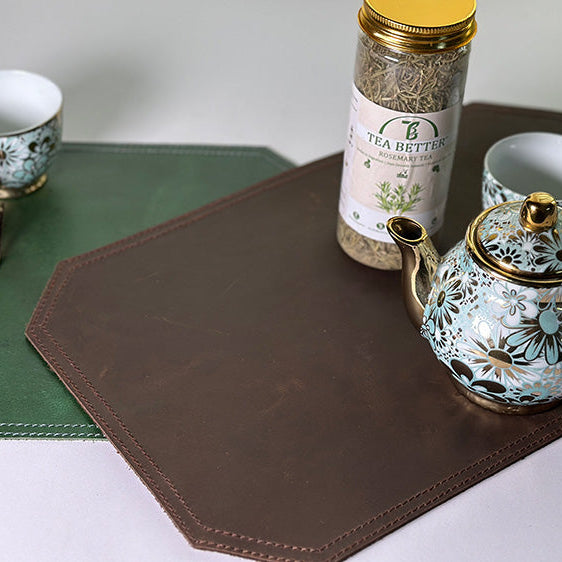
Leather gives a distinctive look with a smooth or naturally textured surface, and suits wooden, marble and glass tables. Placemat quality depends heavily on the grade of leather.
Full-grain leather keeps the hide's natural top layer, which is the strongest part of the hide. It is known for durability and for developing a natural patina with use, and each piece looks slightly different because of the grain. Other grades are often sanded or coated, so ask which grade a placemat is made from.
Leather needs suitable care. Avoid prolonged moisture and high temperatures.
Cotton placemats
Cotton is soft, washable and available in many colours and patterns. It suits everyday meals, but some varieties absorb liquids and stain if spills aren't cleaned promptly.
Polyester placemats
Polyester is lightweight, available in many designs and often easy to maintain. Stain and heat resistance depend on the fabric and manufacturer specifications.
Bamboo placemats
Bamboo has a natural look and a firm surface. It can be affected by prolonged moisture, so dry and store it properly.
Silicone placemats
Silicone is flexible and easy to clean, and many varieties are non-slip and contain small spills. Designs tend to be less formal than leather or fabric.
4. Comparison Table: Which Placemat Material Suits You?
|
Material |
Main advantage |
Possible drawback |
Suitable for |
|
Leather (full-grain) |
Durable, refined look, develops patina |
Needs careful maintenance |
Modern and formal dining |
|
Cotton |
Soft feel, many designs |
Can absorb spills |
Everyday household use |
|
Polyester |
Lightweight and practical |
Quality varies by construction |
Regular dining |
|
Bamboo |
Natural look, firm structure |
Sensitive to prolonged moisture |
Casual dining |
|
Silicone |
Flexible, easy to clean |
Limited formal styling |
Families and everyday meals |
No single material suits every household. Choose based on your cleaning habits, how often you dine at the table, the table type and the look you want.
5. When Is Leather Not the Right Choice?
Leather is a good option, but it isn't right for everyone:
- Homes with toddlers or very messy meals: Silicone or wipe-and-go materials are more forgiving of frequent spills.
- If you want to machine wash them: Leather isn't machine washable, so cotton or polyester is more practical.
- If you often put very hot dishes straight on the table: Use a trivet regardless of material.
- Tight budgets or short-term use: Simpler materials may make more sense.
Choose leather if you value a long-lasting, premium look and are comfortable with simple care.
6. What Are the Common Placemat Sizes?
Sizes vary by brand and shape, so there is no single standard. These are the sizes most commonly found in the market:
|
Shape |
Typical size (cm) |
Typical size (inches) |
Works well for |
|
Rectangular |
30-35 × 43-48 cm |
12-14 × 17-19 in |
Most dining tables, traditional place settings |
|
Round |
33-38 cm diameter |
13-15 in diameter |
Round tables, a softer look |
|
Square |
33-40 cm |
13-16 in |
Smaller tables, modern settings |
|
Oval |
approx. 33 × 45 cm |
approx. 13 × 18 in |
Decorative or formal settings |
A good placemat leaves room for a dinner plate, a glass and cutlery without hanging far over the edge. On a smaller table, choose the lower end of the range. Place a dinner plate on your table and measure before buying.
7. Advantages and Disadvantages of Using Placemats
Advantages
- Surface protection: Helps reduce scratches, moisture marks and minor stains.
- Better organisation: Gives each diner a separate space.
- Simple cleaning: Removable surfaces make post-meal cleaning easier.
- Decorative value: Adds colour, texture and balance to the table.
- Many choices: Available in different materials, shapes, sizes and finishes.
- Flexible use: Suits homes, restaurants, cafés and other dining spaces.
Disadvantages
- Extra maintenance: Some materials need regular cleaning or special care.
- Limited heat resistance: Not every placemat protects against hot cookware.
- Storage: Extra sets need a clean, dry place.
- Material limits: Fabric can absorb liquids, and rigid options can crack.
- Movement: Lightweight designs may shift during meals.
8. How to Choose the Right Placemats
Table size: Leave room for a plate, glass and cutlery. Compact designs avoid crowding on small tables, and larger tables allow wider options.
Shape: Rectangular suits traditional place settings and round complements circular tables. Match the shape to both the table and your crockery.
Material: Think about how often you use the table. Daily family meals favour easy-to-clean materials, while occasional formal dining lets appearance take priority.
Decor: Consider the table finish, chair upholstery, wall colours and dinnerware. Brown, tan and black suit many interiors, and lighter shades create a softer look.
Practical features: Check the thickness, finish, flexibility and cleaning instructions.
Custom placemats: If standard sizes or colours don't fit your table, custom placemats allow you to choose dimensions, colours and design details. They also help restaurants and hotels keep a consistent table presentation.
9. Where Else Can You Use Placemats?
- Kitchen counters: A defined surface for frequently used dining items.
- Coffee tables: Smaller designs protect against beverage containers and decor.
- Restaurant tables: Organised settings for individual customers.
- Cafés: An easy way to arrange plates, cups and cutlery.
- Office dining areas: Useful in shared spaces where staff eat or take refreshments.
Check that a placemat's size and material suit the surface and use you have in mind.
10. How to Clean and Maintain Placemats
- Leather: Dust with a soft, dry cloth. For marks, follow the maker's leather-care instructions and avoid soaking.
- Cotton: Follow the care label for machine or hand washing.
- Polyester: Follow the fabric's instructions and avoid unsuitable cleaners.
- Bamboo: Wipe with a lightly damp cloth and dry thoroughly.
- Silicone: Wash with mild soap and water where the maker permits.
General habits that help:
- Clean spills soon after they happen.
- Let damp placemats dry before storing them.
- Avoid excessive heat.
- Store them somewhere clean and dry.
- Avoid harsh chemicals unless the maker confirms they are safe.
11. How Does The Leather Warehouse Approach Leather Placemats?
The Leather Warehouse has worked in the leather goods industry since 2015 and manufactures its products in-house. We work with full-grain leather and offer customisation across our range, including name personalisation, logo customisation, custom sizes and colours.
Bulk and corporate orders: Restaurants, hotels and other businesses planning larger requirements can discuss quantities, customisation and order details directly with us.You can reach The Leather Warehouse via WhatsApp or email to discuss your bulk order requirements.
Conclusion
Placemats protect dining tables from moisture, spills, scratches and friction, while making meals more organised and adding a decorative touch. The right choice depends on your table size, preferred material, cleaning routine and how you use the table.
Cotton, bamboo, silicone, polyester and leather each have strengths and limits. Think about how often you use your table and what protection matters most, and choose accordingly.
Frequently Asked Questions
1. Why are placemats important for dining tables?
They protect tables from minor scratches, spills, moisture marks and friction, and they create organised individual spaces that improve the look of the table.
2. What is the best material for placemats?
It depends on your needs. Full-grain leather is durable with a refined look, cotton is soft and washable, silicone is easy to clean, bamboo has a natural look, and polyester is lightweight and practical.
3. Do placemats protect dining tables from heat?
Some give limited protection from moderate heat, depending on material and construction. Place hot cookware and serving dishes on a suitable heat-protective mat.
4. How many placemats should I buy?
One per regular seat. A four-seater needs four and a six-seater needs six. Keep a few extra for guests.
5. What size placemat should I choose?
Common rectangular sizes are around 30-35 × 43-48 cm, and round ones around 33-38 cm in diameter. Choose a size that holds a plate, glass and cutlery without crowding your table.
6. Is full-grain leather good for placemats?
Full-grain keeps the hide's natural top layer and is known for durability and a patina that develops with use. It needs simple care and should not be soaked or exposed to high heat.
7. Are custom placemats worth considering?
Yes, when standard sizes, colours or designs don't suit you. They also help restaurants and hotels keep a consistent table presentation.