Imagine arriving at an important meeting, opening your travel bag, and finding your suit covered in deep creases. Or reaching a weekend destination and realizing your carefully packed essentials barely fit because the bag prioritized structure over space.
The truth is that most travelers choose luggage based on appearance, not function.
At first glance, garment bags and duffel bags may seem like two versions of the same idea. Both carry clothes. Both travel easily. Both come in premium materials and modern designs. But once you start using them, the differences become obvious.
One is built to protect clothing and presentation. The other is designed for flexibility and movement.
If you are deciding between the two, this guide breaks down everything you need to know, from design and storage to real-world travel situations, so you can choose the bag that genuinely matches your routine.
 What Is a Garment Bag?
A garment bag is a travel bag created to transport clothing while helping maintain its shape and appearance.
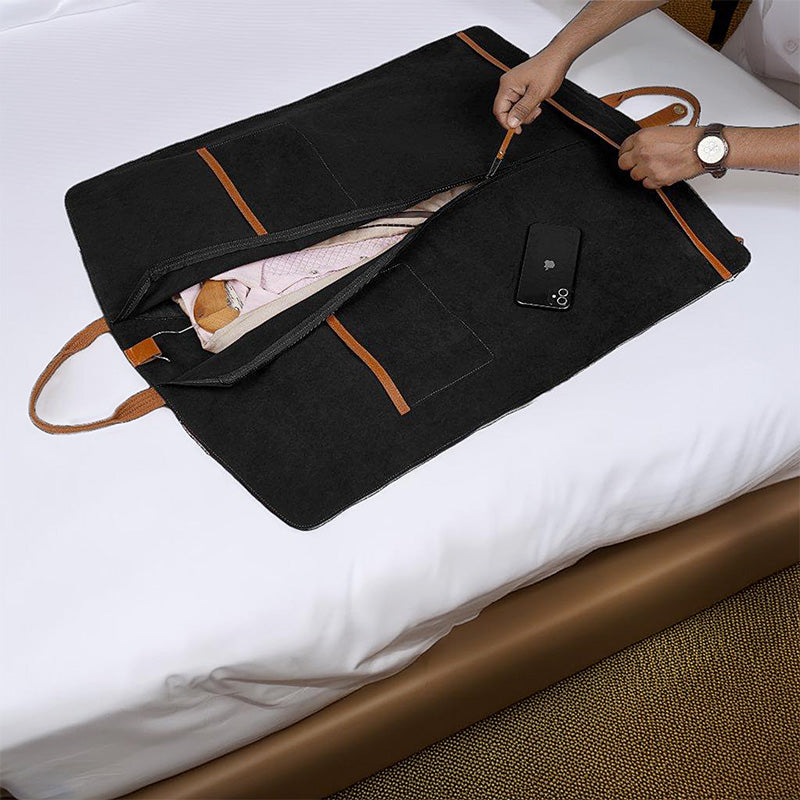
Unlike traditional luggage that requires folding multiple times, garment bags allow clothing to remain flatter during travel. Most designs include hanging sections, securing straps, zippered compartments, and dedicated spaces for accessories.
Garment bags are commonly used by:
-
Business professionals
-
Frequent flyers
-
Wedding guests
-
Event organizers
-
Fashion professionals
-
Travelers carrying formal wear
The goal is simple: reduce wrinkles and keep outfits ready to wear.
Modern garment bags often include extra pockets for ties, shoes, documents, chargers, and personal items, making them more practical than older versions.
 What Is a Duffel Bag?
A duffel bag takes a completely different approach.
Instead of protecting clothing structure, it focuses on carrying capacity and convenience.
Duffel bags are soft-sided, spacious, and built to hold a wide variety of items in one large compartment. They have become one of the most versatile travel options because they adapt to different situations without requiring careful packing.
People commonly use duffel bags for:
-
Weekend travel
-
Gym use
-
Short vacations
-
Road trips
-
Everyday carrying
-
Sports equipment
The appeal of a duffel bag is freedom.
You pack quickly, zip it closed, and go.
The Core Difference Between Garment and Duffel Bags
The biggest difference comes down to one question:
Do you want to protect clothes or maximize storage?
Garment bags prioritize presentation.
Duffel bags prioritize flexibility.
Everything else comes from that design philosophy.
Design Comparison: Structure vs Flexibility
Garment Bag Design
Garment bags typically include:
-
Flat or fold-over construction
-
Internal clothing fasteners
-
Dedicated compartments
-
Hanger support
-
Structured shape
The layout helps clothing stay organized and minimizes movement.
Duffel Bag Design
Duffel bags usually include:
-
Large central compartment
-
Soft walls
-
Carry handles and straps
-
External storage pockets
-
Expandable packing space
Their design allows users to fit more items without worrying about organization.
Wrinkle Protection: Which Bag Wins?
This category is not close.
Garment bags were specifically created to reduce wrinkles.
Because clothing stays flatter and experiences less compression, garments usually arrive in better condition.
A duffel bag, on the other hand, compresses clothing as more items are added.
That does not mean clothing will always wrinkle in a duffel bag, but structured garments such as:
-
Suits
-
Blazers
-
Dresses
-
Formal shirts
typically benefit from garment-style storage.
If appearance matters immediately after arrival, garment bags have a clear advantage.
Storage Capacity Comparison
Storage is where duffel bags shine.
A standard duffel bag can often carry:
-
Multiple outfits
-
Shoes
-
Toiletries
-
Electronics
-
Accessories
-
Extra travel essentials
Garment bags usually sacrifice volume to maintain clothing structure.
If your priority is carrying more items in fewer bags, duffel bags often feel more practical.
Travel Scenarios: Which Bag Works Better?
Business Travel
Winner: Garment Bag
Professional clothing often requires wrinkle protection.
Arriving with pressed clothing can remove the need for hotel ironing or steaming.
Weekend Getaways
Winner: Duffel Bag
Short trips rarely require formal organization.
Duffel bags provide faster packing and easier mobility.
Wedding Travel
Winner: Garment Bag
Wedding outfits usually need protection.
Many travelers specifically choose garment bags to avoid clothing damage.
Gym and Sports
Winner: Duffel Bag
Gym gear, shoes, towels, and accessories fit naturally into duffel layouts.
Remote Work and Digital Nomad Travel
Winner: Depends on packing style
If appearance matters, garment bags help.
If mobility matters more, duffel bags become more useful.
Comfort and Portability
Comfort affects travel more than people expect.
Carrying a Garment Bag
Pros:
-
Balanced organization
-
Professional appearance
-
Better clothing access
Cons:
-
Can feel wider during movement
-
Less convenient in crowded spaces
Carrying a Duffel Bag
Pros:
-
Lightweight
-
Easy shoulder carry
-
Flexible storage
Cons:
-
Can become heavy when overloaded
For airports, trains, and quick movement, many travelers prefer duffel bags.
Durability Comparison
Both bags can be highly durable depending on material.
Common Garment Bag Materials
-
Leather
-
Canvas
-
Nylon
-
Polyester blends
Common Duffel Bag Materials
-
Waxed canvas
-
Leather
-
Ballistic nylon
-
Water-resistant synthetics
Durability depends more on construction quality than bag category.
Look for:
-
Reinforced stitching
-
Strong zippers
-
Quality handles
-
Durable lining
Organization and Accessibility
Organization creates a very different user experience.
Garment Bag Organization
You usually get:
-
Separate clothing sections
-
Shoe compartments
-
Accessory pockets
-
Dedicated spaces
Everything has a place.
Duffel Bag Organization
You usually get:
-
Open storage
-
Flexible packing
-
Faster access
Less structure often means quicker packing.
Cost Comparison
Price varies widely.
Entry-level versions of both can be affordable.
Premium models increase cost through:
-
Better materials
-
Custom craftsmanship
-
Improved hardware
-
Additional compartments
Garment bags often cost more because of their specialized construction.
However, investment may make sense for frequent business travelers.
Who Should Buy a Garment Bag?
A garment bag makes sense if you:
-
Travel with suits frequently
-
Attend meetings regularly
-
Want wrinkle reduction
-
Carry professional clothing
-
Prefer organized packing
You may not need one if most trips are casual.
 Who Should Buy a Duffel Bag?
Choose a duffel bag if you:
-
Travel light
-
Take short trips
-
Prefer flexibility
-
Need gym compatibility
-
Pack mixed essentials
Duffel bags suit people who prioritize convenience.
Can One Bag Replace the Other?
Not completely.
A garment bag and a duffel bag solve different problems.
However, modern travel products have introduced hybrid options.
Some designs now combine:
-
Garment storage
-
Duffel-style capacity
-
Foldable structure
-
Multi-purpose organization
These hybrid models appeal to travelers who want one bag for both professional and casual use.
Common Mistakes People Make When Choosing
Buying based only on appearance
A good-looking bag may not suit your travel habits.
Ignoring trip type
Business and leisure travel require different priorities.
Underestimating clothing care
Wrinkles become frustrating after long travel days.
Choosing too much storage
Overpacking reduces comfort.
Forgetting airline compatibility
Size matters more than many travelers expect.
How to Make the Right Decision
Ask yourself these questions:
-
Do I carry formal clothing often?
-
Do wrinkles matter to me?
-
Do I pack heavy or light?
-
How long are my typical trips?
-
Do I prefer organization or flexibility?
Your answers usually reveal the better option.For bulk orders
Contact us :
WhatsApp: Click to Chat
Final Thoughts
The debate between garment bags and leather duffel bags is not about which one is better.
It is about choosing the right tool for the way you travel.
A garment bag helps protect presentation, maintain structure, and keep clothing ready to wear.
A duffel bag gives freedom, flexibility, and easy movement.
For business travelers and formal occasions, garment bags often deliver more value.
For weekend escapes, gym sessions, and everyday trips, duffel bags continue to be one of the most practical travel choices available.
The best bag is not the one with the most features.
It is the one that makes travel feel effortless.
FAQ
Q1. What makes a garment bag different from a duffel bag?
A garment bag is designed to keep clothing organized and reduce creasing by allowing garments to stay flatter during travel. A duffel bag focuses more on storage capacity and flexible packing, making it ideal for carrying mixed travel essentials.
Q2. Should I choose a garment bag instead of a duffel bag?
That depends on how you travel. If you regularly carry suits, dresses, or business outfits, a garment bag is often the smarter option. If you prefer quick packing and need room for different items, a duffel bag may fit your routine better.
Q3. Can garment bags be taken as carry-on luggage?
Many garment bags are created with carry-on travel in mind and fit airline cabin limits. Since baggage policies differ between airlines, checking size requirements before departure is always recommended.
Q4. Do garment bags really help keep clothes wrinkle-free?
Garment bags can reduce wrinkles because clothes stay more secure and experience less folding pressure. While no bag guarantees perfectly pressed clothing, garment bags generally help maintain a cleaner appearance during travel.
Q5. Is a duffel bag suitable for work or business trips?
Yes, especially for short business trips or less formal travel. However, if you are carrying tailored clothing or need your outfit ready to wear immediately after arrival, a garment bag usually offers better protection.