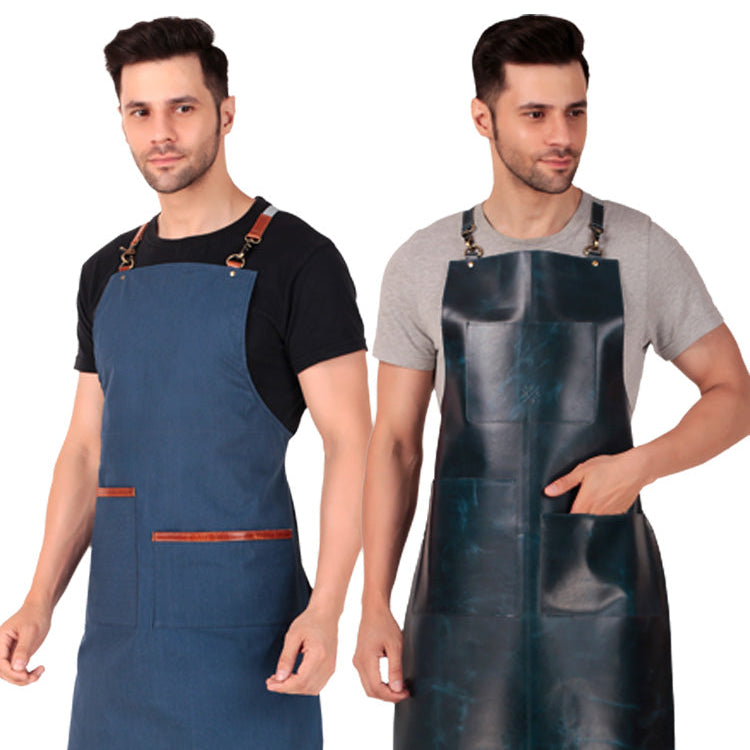
Handmade Leather Aprons vs Mass-Produced Aprons: Which One Is the Better Investment?
Buying a leather apron isn't just about choosing something that looks good. It's about selecting a tool you'll rely on every day. Whether you're a chef preparing meals during a busy dinner service, a woodworker shaping furniture, a blacksmith working near sparks, or a barber spending long hours behind the chair, your apron becomes part of your routine.
At first glance, many leather aprons look nearly identical. They may have similar pockets, adjustable straps, and attractive finishes. However, once you start using them regularly, the differences become obvious. Some develop a rich character and remain dependable for years, while others begin showing loose stitching, stretched straps, or cracked surfaces after relatively little use.
The biggest reason for this difference lies in how the apron is made.
Today, buyers usually choose between handmade leather aprons and mass-produced leather aprons. Both serve the same purpose, but they differ in craftsmanship, leather quality, durability, comfort, customization, and long-term value.
So, which one deserves your money? Let's break down every important detail to help you make an informed decision.
Why Does the Type of Leather Apron Matter?
A leather apron is more than a piece of protective clothing. Think of it as a trusted partner that works alongside you every day. If your tools are extensions of your hands, your apron is the shield that keeps you comfortable, organized, and protected.
Choosing the wrong apron can lead to discomfort, frequent replacements, and unnecessary expenses. Choosing the right one can improve productivity and save money over time.
Protection Beyond Clothing
Leather naturally offers excellent resistance against heat, sharp tools, sawdust, grease, and minor impacts. This makes leather aprons popular among professionals who work in demanding environments.
Unlike fabric aprons that may wear out quickly, genuine leather can handle years of daily use when properly maintained.
Long-Term Value vs Short-Term Savings
A cheaper apron may seem like the better deal initially. However, replacing it every year can cost more than purchasing one high-quality handmade apron that lasts for many years.
This is where understanding the differences becomes valuable.
What Is a Handmade Leather Apron?
A handmade leather apron is crafted by skilled artisans who carefully oversee every stage of production. Rather than relying entirely on automated machinery, experienced craftsmen inspect, cut, stitch, and finish each apron individually.
Since leather is a natural material, no two hides are exactly alike. Handmade production allows artisans to work with these natural variations instead of hiding them.
The result is an apron with its own unique appearance and character.
How Skilled Artisans Create Handmade Aprons
Creating a premium leather apron involves much more than simply stitching pieces together.
Every stage requires precision.
Leather Selection Process
The process begins by selecting quality hides.
Artisans inspect each hide for:
-
Grain consistency
-
Thickness
-
Natural markings
-
Flexibility
-
Strength
Instead of choosing leather purely based on cost, they prioritize durability and appearance.
Hand Cutting and Stitching
Patterns are carefully placed to maximize strength while preserving the natural beauty of the leather.
Heavy-duty thread, reinforced seams, and durable hardware are then used to assemble the apron.
Even small details like pocket placement and strap positioning receive individual attention.
Final Quality Inspection
Before shipping, each apron is usually inspected for:
-
Stitch quality
-
Rivet strength
-
Strap adjustment
-
Surface finish
-
Edge polishing
This detailed inspection helps reduce manufacturing defects.
What Is a Mass-Produced Leather Apron?
Mass-produced leather aprons are manufactured in factories using automated equipment designed to produce large quantities quickly.
The primary goal is consistency and efficiency.
Thousands of identical aprons can be produced in a relatively short period.
Because production is highly standardized, factory-made aprons generally cost less than handmade alternatives.
How Factory Production Works
Large-scale manufacturing follows a streamlined workflow.
Leather sheets move through automated cutting machines before being stitched using industrial sewing equipment.
Hardware is attached mechanically, allowing manufacturers to maintain high production volumes.
This process reduces labor costs and speeds up production.
Automated Manufacturing
Automation helps maintain consistent dimensions and assembly.
Benefits include:
-
Faster production
-
Lower costs
-
Uniform appearance
-
High inventory availability
However, speed sometimes comes at the expense of individual craftsmanship.
Standardized Quality Checks
Unlike handmade production, where every apron may receive individual attention, factories often inspect products in batches.
Most products meet acceptable standards, but finer details may not receive the same level of scrutiny.
Handmade Leather Aprons vs Mass-Produced Aprons: Key Differences
Although both options provide protection, their long-term performance differs significantly.
|
Feature |
Handmade Leather Apron |
Mass-Produced Leather Apron |
|
Craftsmanship |
Individual artisan work |
Automated production |
|
Leather Selection |
Carefully selected hides |
Bulk sourcing |
|
Stitch Quality |
Reinforced and detailed |
Standard machine stitching |
|
Uniqueness |
Every apron is different |
Uniform appearance |
|
Durability |
Excellent |
Varies by manufacturer |
|
Customization |
Extensive |
Limited |
|
Repairs |
Easier |
Sometimes difficult |
|
Character Over Time |
Develops natural patina |
Often ages less gracefully |
Which Leather Quality Is Better?
Leather quality plays the biggest role in determining how long an apron will last.
Understanding leather grades makes choosing much easier.
Full-Grain Leather
Full-grain leather is considered the highest-quality option.
It retains the strongest outer layer of the hide, preserving its natural grain and exceptional durability.
Advantages include:
-
Outstanding strength
-
Rich natural texture
-
Beautiful aging
-
Excellent resistance to wear
-
Long lifespan
Many premium handmade leather aprons are made from full-grain leather because it offers superior performance and develops a distinctive patina with regular use.
Top-Grain Leather
Top-grain leather is slightly refined to create a smoother appearance while maintaining good durability.
It offers:
-
Softer texture
-
Lighter weight
-
Consistent finish
-
Easy maintenance
High-quality factory-made and handmade aprons may both use top-grain leather.
Split Leather
Split leather comes from the lower layers of the hide.
It is generally more affordable but less durable than full-grain or top-grain leather.
It may suit occasional use but is less ideal for demanding professional environments.
Which Apron Lasts Longer?
When buying a leather apron, durability is often the deciding factor. An apron should withstand years of daily wear, not just a few months.
Handmade leather aprons generally last longer because they are built with premium materials and careful craftsmanship. Skilled artisans reinforce stress points, inspect every stitch, and use durable hardware to ensure the apron can handle demanding work environments.
Mass-produced aprons vary in quality. Some premium factory-made options perform well, but budget-friendly versions often use thinner leather, lighter stitching, and lower-grade hardware. Over time, these components may wear out faster under heavy use.
What Affects the Lifespan of a Leather Apron?
Several factors influence how long an apron will last:
-
Leather thickness
-
Leather grade
-
Stitching quality
-
Rivet strength
-
Buckle material
-
Daily usage
-
Proper maintenance
If cared for properly, a handmade full-grain leather apron can remain in excellent condition for many years.
Which Apron Feels More Comfortable?
Comfort becomes increasingly important if you wear an apron for several hours every day.
A stiff or poorly designed apron can cause shoulder fatigue, restrict movement, and reduce productivity.
Handmade leather aprons are often designed with comfort in mind. Many feature adjustable cross-back straps that distribute weight evenly across the shoulders instead of placing pressure on the neck.
Mass-produced aprons may also include adjustable straps, but lower-cost models sometimes prioritize manufacturing efficiency over ergonomic design.
Why Do Adjustable Straps Matter?
An apron should fit your body rather than forcing your body to fit the apron.
A good adjustment system helps:
-
Reduce shoulder strain
-
Improve posture
-
Increase flexibility
-
Keep tools within easy reach
-
Improve comfort during long work sessions
The better the fit, the easier it becomes to focus on your craft.
Does Craftsmanship Really Make a Difference?
Absolutely.
Craftsmanship is like the foundation of a house. You may not notice it immediately, but it determines how well everything holds together over time.
Handmade leather aprons reflect the experience and attention of skilled artisans. Every stitch, rivet, and edge receives individual attention, resulting in a product built for durability and reliability.
Mass-produced aprons focus on consistency and speed. While modern factories produce attractive products, automated production cannot always match the detail-oriented finishing found in handcrafted items.
Small Details That Make a Big Difference
Quality craftsmanship often includes:
-
Smooth, polished edges
-
Reinforced corners
-
Even stitching
-
Strong brass hardware
-
Balanced pocket placement
-
Clean finishing
These features improve both appearance and long-term performance.
Which Apron Offers Better Customization?
Customization is one of the biggest advantages of handmade leather aprons.
Professionals often want an apron that reflects their personality or business identity.
Common customization options include:
-
Name embossing
-
Initials
-
Company logo
-
Custom pocket layouts
-
Special tool holders
-
Adjustable sizing
-
Personalized strap colors
These options are much easier to offer when each apron is made individually.
Mass-produced aprons personalized apron usually offer limited personalization because large-scale manufacturing follows standardized designs.
Which Option Provides Better Value for Money?
Price is important, but value goes beyond the initial purchase cost.
Imagine buying two pairs of work boots. One costs half as much but wears out in a year. The other lasts five years with proper care. Which one actually saves more money?
The same principle applies to leather aprons.
Although handmade leather aprons often have a higher upfront cost, they usually provide better long-term value because of their durability and repairability.
Mass-produced aprons are often more affordable initially, making them suitable for beginners, students, or occasional users.
Cost vs Value Comparison
|
Factor |
Handmade Leather Apron |
Mass-Produced Leather Apron |
|
Initial Cost |
Higher |
Lower |
|
Expected Lifespan |
Long |
Moderate |
|
Repairs |
Easier |
Sometimes difficult |
|
Appearance Over Time |
Improves with age |
Depends on material |
|
Long-Term Value |
Excellent |
Good for occasional use |
Who Should Buy a Handmade Leather Apron?
A handmade leather apron is an excellent investment for people who rely on their tools every day.
It is especially suitable for:
-
Professional chefs
-
Woodworkers
-
Blacksmiths
-
Leather craftsmen
-
Barbers
-
Florists
-
Bartenders
-
Grill masters
-
Potters
-
Artists
If your apron becomes part of your daily routine, investing in quality usually pays off.
Who Should Choose a Mass-Produced Apron?
Mass-produced leather aprons can still be a practical option for many buyers.
They are ideal for:
-
Beginners
-
Hobbyists
-
Students
-
Occasional DIY users
-
Home cooks
-
Weekend woodworkers
If your apron is used only occasionally, a quality factory-made model may provide everything you need.
Things to Consider Before Buying a Leather Apron
Before making your final decision, ask yourself a few important questions.
How Often Will You Use It?
Daily professional use calls for stronger materials than occasional weekend projects.
Which Leather Grade Is Used?
Whenever possible, choose full-grain or top-grain leather for better durability.
Is the Hardware Durable?
Look for:
-
Solid brass buckles
-
Heavy-duty rivets
-
Reinforced stitching
-
Strong adjustable straps
Can It Be Adjusted?
A comfortable fit improves safety, mobility, and productivity.
Does It Meet Your Work Requirements?
Different professions require different features.
For example:
-
Woodworkers may need multiple tool pockets.
-
Chefs may prefer lightweight flexibility.
-
Blacksmiths benefit from thicker leather for heat protection.
-
Barbers often prefer slim designs with easy-access pockets.
Choosing an apron based on your work ensures better performance and comfort.
Which Leather Apron Is Better for Professionals?
If you're a professional who depends on an apron every day, the answer is clear: a handmade leather apron is generally the better investment.
Professionals spend hours working in demanding environments. Their apron must handle repeated bending, lifting, tool storage, heat exposure, and constant movement. A well-crafted handmade apron is designed with these challenges in mind.
However, this doesn't mean every mass-produced apron is a poor choice. High-quality factory-made aprons can still offer good performance, especially for light or moderate use. The key is understanding your workload and choosing accordingly.
Best Choice by Profession
|
Profession |
Recommended Apron Type |
Why? |
|
Woodworker |
Handmade Leather Apron |
Durable, tool-friendly, long-lasting |
|
Chef |
Handmade or Premium Factory-Made |
Comfort and flexibility |
|
Blacksmith |
Handmade Leather Apron |
Thick leather for better protection |
|
Barber |
Handmade Leather Apron |
Lightweight, stylish, customizable |
|
Florist |
Handmade Leather Apron |
Comfortable with personalized pockets |
|
Bartender |
Handmade Leather Apron |
Professional appearance and durability |
|
Home Cook |
Premium Mass-Produced Apron |
Budget-friendly for occasional use |
|
DIY Hobbyist |
Mass-Produced Apron |
Cost-effective for light projects |
What Are the Pros and Cons of Each Option?
Handmade Leather Aprons
Pros
-
Premium craftsmanship
-
Full-grain leather options
-
Excellent durability
-
Better stitching quality
-
Customizable
-
Develops a beautiful natural patina
-
Easier to repair
-
Unique character
Cons
-
Higher initial cost
-
Longer production time for custom orders
Mass-Produced Leather Aprons
Pros
-
Affordable
-
Widely available
-
Consistent appearance
-
Good for beginners
-
Faster delivery
Cons
-
Limited customization
-
Quality varies between brands
-
Lower-grade materials in budget models
-
May require earlier replacement with heavy use
Which Leather Apron Should You Choose?
The right choice depends on how you plan to use it.
Choose a handmade leather apron if you:
-
Work professionally every day.
-
Need long-term durability.
-
Appreciate premium craftsmanship.
-
Want personalization or logo embossing.
-
Prefer full-grain leather.
-
View your apron as a long-term investment.
Choose a mass-produced leather apron if you:
-
Have a limited budget.
-
Use an apron occasionally.
-
Need a quick replacement.
-
Are just starting a new hobby.
-
Prefer a lower upfront cost.
There isn't a single "best" option for everyone. The best apron is the one that fits your work, budget, and expectations.For bulk order
Contact us :
-
WhatsApp: Click to Chat
Conclusion
Choosing between handmade leather aprons and mass-produced aprons comes down to balancing quality, craftsmanship, durability, and budget.
A handmade leather apron stands out for its attention to detail, premium materials, and long-lasting performance. Skilled artisans carefully select leather, reinforce stitching, and create an apron that not only protects you but also improves with age. For professionals who rely on their gear every day, this type of apron is often a worthwhile investment.
Mass-produced leather aprons, on the other hand, offer affordability and convenience. They are an excellent option for beginners, hobbyists, or anyone who needs reliable protection without a significant upfront cost. While they may not provide the same level of craftsmanship or customization, many quality factory-made aprons still deliver dependable performance.
Before making your purchase, think about how often you'll wear the apron, the type of work you do, and the features that matter most to you. Whether you're crafting furniture, preparing meals, tending a workshop, or creating art, the right leather apron should feel like a dependable partner that supports your work every step of the way.
In the end, a leather apron isn't just another accessory. It's a practical investment in comfort, protection, and productivity.
Frequently Asked Questions (FAQs)
Q1. Are handmade leather aprons worth the extra cost?
Yes. Handmade leather aprons are often worth the investment because they typically use higher-quality leather, stronger stitching, and durable hardware. With proper care, they can last for many years, making them cost-effective over time.
Q2. Can a mass-produced leather apron be good quality?
Absolutely. Not all factory-made aprons are low quality. Premium manufacturers use genuine leather and strong construction methods. However, quality can vary significantly, so it's important to check the leather type, stitching, and hardware before buying.
Q3. Which leather is best for a professional apron?
Full-grain leather is generally considered the best choice because it offers superior strength, durability, and develops a beautiful natural patina over time. Top-grain leather is another excellent option for those seeking a smoother finish.
Q4. How do I maintain a leather apron to increase its lifespan?
Clean the apron with a soft, dry or slightly damp cloth, avoid soaking it in water, store it in a cool and dry place, and apply a quality leather conditioner every few months to keep the leather soft and prevent cracking.
Q5. Which type of leather apron is better for beginners?
For beginners or occasional users, a well-made mass-produced leather apron is often a practical and budget-friendly choice. If you expect to use the apron regularly or professionally, investing in a handmade leather apron can provide greater long-term value.