

Housekeeping Apron Materials: How to Choose the Right Fabric for Comfort, Protection, and Durability
A housekeeping apron is much more than a piece of workwear. It serves as a protective barrier against dirt, stains, water, and cleaning chemicals while helping staff maintain a neat and professional appearance. Whether you're working in a hotel, healthcare facility, restaurant, resort, or cleaning company, selecting the right apron material can significantly impact your daily comfort and efficiency.
 With various fabric options available, including cotton, polyester, waterproof materials, and leather, understanding their individual features can help you make the best choice for your work environment.
Why Does Apron Fabric Matter?
The performance of a housekeeping apron largely depends on the material from which it is made. The right fabric can provide better protection, improve comfort during long shifts, reduce maintenance efforts, and increase the lifespan of the apron.
A durable and well-designed apron not only protects clothing but also contributes to a more professional and productive workplace.
Popular Materials Used in Housekeeping Aprons
Housekeeping aprons are commonly manufactured using four main materials:
- Cotton
- Polyester
- Waterproof Fabrics
- Leather
Each fabric offers distinct advantages depending on the nature of the job.
Cotton Aprons: Best for Everyday Comfort
Cotton remains one of the most popular choices because of its natural softness and breathability. Employees who spend long hours working indoors often prefer cotton aprons for their comfort.
 Advantages of Cotton Aprons
- Soft and skin-friendly
- Excellent air circulation
- Lightweight and comfortable
- Suitable for sensitive skin
- Easy to wash and maintain
Cotton aprons help reduce heat buildup, making them ideal for indoor housekeeping duties.
Disadvantages of Cotton Aprons
- Absorbs water quickly
- More prone to stains
- Can shrink after repeated washing
- Wrinkles easily
- Less durable than synthetic fabrics
While cotton offers superior comfort, it may not be the ideal choice for environments involving frequent exposure to liquids.
Polyester Aprons: The Industry Favorite
Polyester is widely used across the hospitality sector because of its strength, affordability, and low-maintenance nature.
Benefits of Polyester Aprons
- Highly durable
- Wrinkle-resistant
- Retains its shape after washing
- Quick-drying
- Cost-effective for businesses
Hotels, resorts, and commercial cleaning companies often choose polyester aprons because they maintain a professional appearance even after repeated use.
Drawbacks of Polyester Aprons
- Less breathable than cotton
- Can feel warm in hot conditions
- Not as soft as natural fibers
Despite these limitations, polyester remains one of the most practical materials for professional housekeeping uniforms.
Waterproof Aprons: Maximum Protection for Tough Jobs
Waterproof aprons are specifically designed for environments where employees frequently encounter water, cleaning agents, or chemical solutions.
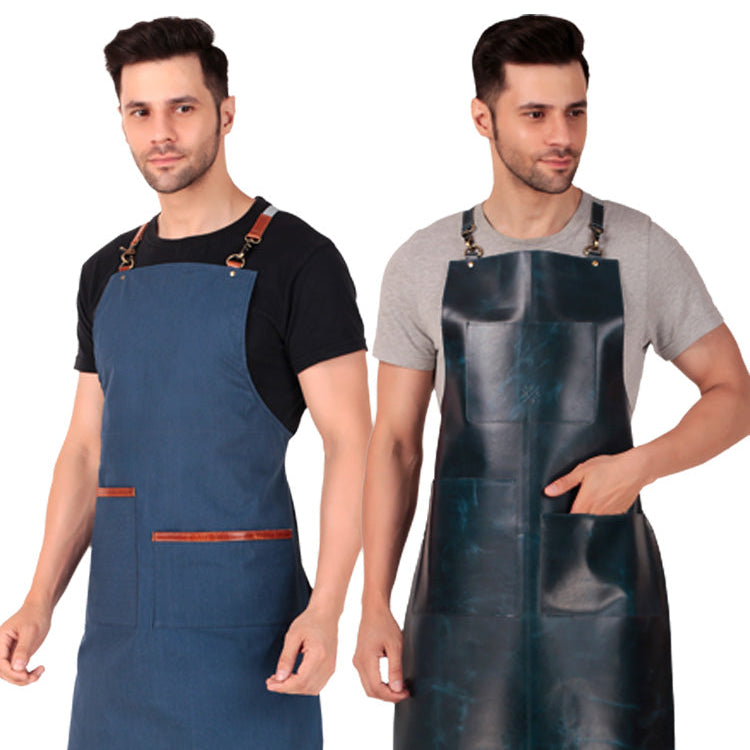
 These leather aprons are typically made from coated polyester, PVC, or other water-resistant materials.
Advantages of Waterproof Aprons
- Superior protection against spills
- Prevents moisture from reaching clothing
- Resistant to stains
- Easy to clean
- Suitable for intensive cleaning tasks
For professional cleaners working with disinfectants and cleaning chemicals, waterproof aprons provide excellent protection throughout the workday.
Disadvantages of Waterproof Aprons
- Limited breathability
- Can feel heavier than fabric aprons
- May become uncomfortable during extended use
They are most beneficial when protection is the primary concern.
Leather Aprons: Premium Appearance and Long-Term Durability
Leather aprons are known for their strength and elegant appearance. Although commonly used in workshops and kitchens, they are increasingly being adopted in luxury hospitality settings.
Benefits of Leather Aprons
- Exceptional durability
- Premium and sophisticated appearance
- Resistant to wear and tear
- Long service life
Luxury hotels and high-end establishments often use leather aprons to create a polished and professional image.
Drawbacks of Leather Aprons
- Higher purchase cost
- Heavier than fabric alternatives
- Requires regular maintenance
- Not naturally waterproof
Although leather may not be suitable for every housekeeping role, it provides unmatched durability and style.
Comparing Housekeeping Apron Materials
| Feature | Cotton | Polyester | Waterproof Fabric | Leather |
|---|---|---|---|---|
| Comfort | Excellent | Good | Moderate | Moderate |
| Durability | Good | Excellent | Very Good | Excellent |
| Water Resistance | Low | Moderate | Excellent | Moderate |
| Breathability | Excellent | Good | Low | Low |
| Maintenance | Easy | Easy | Very Easy | Moderate |
| Professional Appearance | Good | Very Good | Good | Excellent |
| Cost | Medium | Affordable | Medium | Premium |
Which Apron Material Lasts the Longest?
If longevity is your main concern, leather and polyester are the strongest options.
A high-quality leather apron can last for years with proper care, while polyester remains highly resistant to daily wear, frequent washing, and workplace demands. Cotton typically shows signs of wear sooner, while waterproof materials may gradually lose their protective coating over time.
Which Material Is the Easiest to Maintain?
For housekeeping professionals, easy maintenance can save valuable time.
The easiest materials to clean are:
- Waterproof Fabric
- Polyester
- Cotton
- Leather
Most spills can be wiped directly from waterproof aprons, whereas leather requires specialized cleaning products and conditioning treatments.
Which Fabric Provides the Best Protection?
When protection from water, cleaning chemicals, and stains is essential, waterproof fabric is the clear winner.
These aprons create a protective barrier that prevents liquids from penetrating through to clothing, making them ideal for demanding cleaning environments.
Which Material Offers the Greatest Comfort?
Comfort requirements vary depending on workplace conditions.
- Cotton delivers the highest level of breathability and comfort.
- Polyester provides a balance between comfort and durability.
- Waterproof materials focus on protection.
- Leather prioritizes appearance and long-term performance.
For housekeeping staff working long shifts indoors, cotton remains one of the most comfortable options available.
Cost Comparison
| Material | Price Category |
| Polyester | Budget-Friendly |
| Cotton | Affordable to Moderate |
| Waterproof Fabric | Moderate |
| Leather | Premium |
For organizations purchasing uniforms in large quantities, polyester often provides the best return on investment.
How to Choose the Best Housekeeping Apron
Before selecting an apron, consider the following:
Do You Frequently Work with Water or Chemicals?
Choose a waterproof apron for maximum protection.
Is Comfort Your Highest Priority?
Cotton is the ideal choice for breathability and all-day comfort.
Do You Need a Durable Everyday Uniform?
Polyester offers outstanding durability and value.
Are You Looking for a Premium Appearance?
Leather provides a sophisticated and professional look.
Common Buying Mistakes to Avoid
Many buyers focus only on the purchase price and overlook other important factors.
Avoid these common mistakes:
- Choosing the cheapest fabric available
- Ignoring durability requirements
- Prioritizing appearance over functionality
- Overlooking cleaning and maintenance needs
- Selecting the wrong material for the working environment
Making the right choice can improve employee comfort, reduce replacement costs, and increase workplace efficiency.
Conclusion
The best housekeeping apron material depends entirely on the tasks being performed. Cotton offers exceptional comfort, polyester delivers excellent durability and affordability, waterproof fabrics provide superior protection, and leather creates a premium professional image.
For most hotels, resorts, and cleaning businesses, polyester remains the preferred option because it combines strength, easy maintenance, and cost-effectiveness. However, workers exposed to water and chemicals may benefit more from waterproof materials, while luxury establishments may favor the elegance of leather.
Ultimately, the ideal apron is one that keeps workers comfortable, protected, and professional throughout every shift.
Frequently Asked Questions
Q.1 What is the most recommended material for a housekeeping apron?
Polyester is generally considered the best all-around option due to its durability, affordability, and easy maintenance.
Q.3 Are leather aprons suitable for housekeeping work?
Yes, leather aprons can be used in premium hospitality settings, although they require more care and maintenance.
Q.4 How durable are polyester housekeeping aprons?
A quality polyester apron can withstand frequent washing and daily use for several years.
Q.5 Which is better for cleaners: cotton or waterproof fabric?
Cotton provides greater comfort, while waterproof fabric offers better protection from water and cleaning chemicals.
Q.6 What is the most economical apron material?
Polyester is usually the most cost-effective choice because it is affordable and has a long lifespan.


Comments
m88c46
1etkra